Wednesday, July 17, 2024

Blood cobalt and the chaos in central Africa

StrategyPage has a long essay on the Congo, and the elections.

but the part I want to quote is this, and I wonder how China managed to control their mineral wealth.

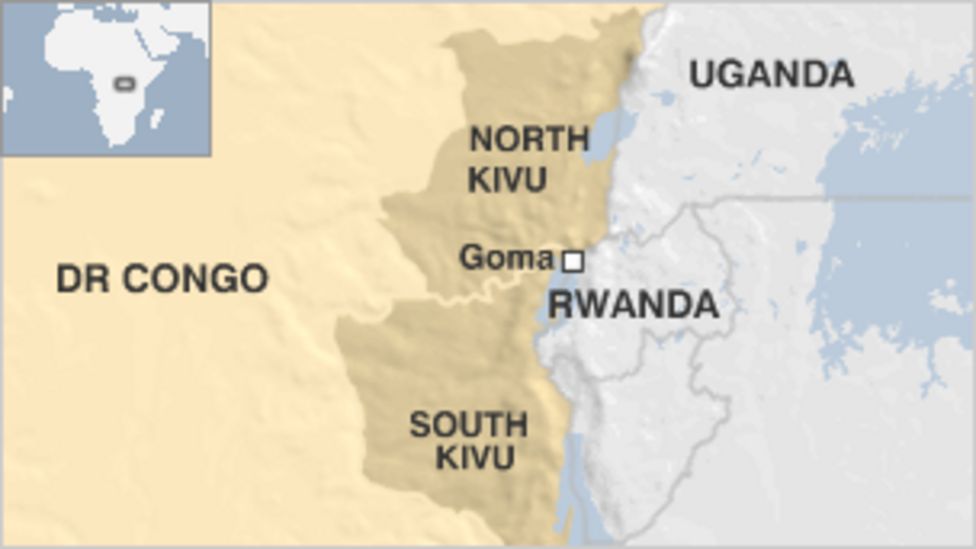
Just defeating Kabila in an election was a remarkable feat because the former president had enriched himself with corrupt dealings. The worst corruption was in eastern Congo (Ituri, North and South Kivu provinces) and southern Congo (Katanga province). These provinces are where foreign firms mine and export valuable minerals.

what it comes down to is that China is investing in the cobalt mining, and it's easy to bribe and let authorities steal the profit (and probably the Chinese firms will also divert some of that money).

In southeastern Congo (Lualaba province) the state-owned cobalt monopoly, Entreprise Generale du Cobalt (EGC), had been paying artisanal, or informal, cobalt miners a minimum price of $30,000 a ton for cobalt that was selling for $50,000 a ton. The government contended that unregulated minral brokers paid artisanal miners much less than $30,000 a ton. For a long time these independent miners have produced about ten percent of Congo’s Cobalt. Most of those mineral brokers work with or for Chinese companies which control an estimated 70 percent of Congo’s mineral deposits and mining industry. The Chinese state-owned CNMC (China Nonferrous Metal Mining Company Ltd.) owns huge cobalt and copper reserves in Congo.,,,

Congo is the world’s biggest cobalt producer, each year producing a growing majority of the world’s total cobalt. In 2020 Congo produced about 100,000 tons of cobalt, which was 71 percent of the world total. By 2021 industry sources estimated that Chinese companies controlled around 40 percent of Congo’s cobalt mining capacity. 

Why cobalt? China is planning to take over the world with their electric cars.

it is not just exploiting the workers and stealing the profits: It is also destroying the environment and displacing people from their traditional land.

Human rights abuses are well documented

AlJazeerah reportAlJazeerah report

In the report Powering Change or Business as Usual? published on Tuesday, Amnesty International and the DRC-based organisation IBGDH, or Initiative pour la Bonne Gouvernance et les Droits Humains (Initiative for Good Governance and Human Rights), detail how the expansion of multinational mining operations has led to communities being forced from their homes and farmland.,,“Climate justice demands a just transition. Decarbonising the global economy must not lead to further human rights violations. The people of the DRC experienced significant exploitation and abuse during the colonial and post-colonial era, and their rights are still being sacrificed as the wealth around them is stripped away.”

Amnesty International report:“The forced evictions taking place as companies seek to expand industrial-scale copper and cobalt mining projects are wrecking lives and must stop now,” said Agnès Callamard, Amnesty International’s Secretary General.

NPR reports:How 'modern-day slavery' in the Congo powers the rechargeable battery economy

much of the DRC's cobalt is being extracted by so-called "artisanal" miners — freelance workers who do extremelyKara says the mining industry has ravaged the landscape of the DRC. Millions of trees have been cut down, the air around mines is hazy with dust and grit, and the water has been contaminated with toxic effluents from the mining processing. dangerous labor for the equivalent of just a few dollars a day.


even Joe Rogan is publicizing this atrocity:

Monday, July 01, 2024

South African Elections

 I hadn't been following the elections in South Africa, since essentially the president was reelected in early June

But the backstory is that the ANC lost it's majority so must join with other parties to form a government.

NPR report:

Tessa Dooms, a director at Rivonia Circle, a think tank in South Africa, said it was a historic result that diminished the ANC’s three decades hold on power. “The election in South Africa is an important watershed moment that fundamentally changes politics,” she said...The ANC will now have to form a coalition government with one or more opposition parties for the first time, to remain in power...

however, will the coalition stand?

,,,,,

Global Voices also has a long analysis from the local blogopshere and quotes a left wing politician as saying the ANC has now partnered with with the DA to form a government, who they claim is the same as joining with white money interests.

observation from Africafeeds:

The radical left Economic Freedom Fighters (EFF) and populist uMkhonto we Sizwe refused to participate in a government that included the DA. “History will judge you and judge you harshly,” Malema said. “This is not a government of national unity. This is a grand coalition between the ANC and white monopoly capital.”


Global voices has more discussion of the pact including social media commentary at the link.

this is not right vs left, but about the corruption in the ANC, and the economic problems making the income disparity there worse.

By the way: China is SA's major trade parner, so how does this affect the economy?
Here, cheap Chinese imports have destroyed local industries, and people resent the Chinese for not hiring locals. So economically the talk of worrying about white money is more complicated: Will this lead to more investment in the South African economy (and maybe lead to SA businesses being able to fight off Chinese competition)? 

I have no idea.

Tuesday, June 04, 2024

West African rice recipe

 We grow organic brown rice here in the Philippines, but a lot of rice is grown in West Africa, and originally that rice , Oryza glaberrima was a slightly different type than Asian rice, and was domesticated 3000 years ago.according to Wikipedia.

In comparison to Asian rice, African rice is hardy, pest-resistant, low-labour, and suited to a larger variety of African conditions.[1] It is described as filling, with a distinct nutty flavour.

This rice was the one originally planted in the Southern Unite states, but even in Africa, it has mainly been replaced by the Asian variety which is more productive, but there is a push to continue growing this valuable crop.

more at Atlas Obscura.

If you’ve been paying attention to the growth in interest in West African culinary traditions, you’ve probably noticed the increased popularity of Jollof rice. The name derives from one of the kingdoms of my Ancestors, the Wolof peoples living in modern-day Senegal, Gambia, and Mauritania. The Wolof have a great reputation as traders, artisans, musicians, and cooks, forming along with their neighbors the heart of the culture and cuisine of Senegambia...Jollof rice, or benachin, may be from Senegambia, but it spread through Wolof and Mande traders and unfortunately due to colonialism. Different countries have different names and styles of preparation to match. The fiercest rivalry may be between Ghana and Nigeria.
However, Jollof-style rice became the grandmother of Lowcountry red rice as well as jambalaya and rice from Mexico, Brazil, and various spaces in the Caribbean. All you need is tomato, onion, pepper, and spices.

Recipe at link

this video explains how you make it.


this one uses Jasmine rice, since the African rice is not available in most western countries.

This article at FlavorInsider compares Jollof rice and Jumbalaya. Some similarities but not the same.

Thursday, May 23, 2024

Kenya provides peacekeeping troops to Haiti


alJ discusses here.

........the Euroweenies Germans of course are skeptical. The Germans see them as patsies for the USA. Huh?. Why are they going outside of Africa? Uh, fellahs, they were in Croatia as peacekeepers a decade ago. The NWO is trying to stop this from happening of course. I wonder why.

my sarcasm: Well, if the Germans are worried about genocide elsewhere in the world, why don't they see genocide in Haiti as a problem?, why don't they send their troops there? 


........

Kenyan peacekeepers have worked elsewhere: such as in the Congo.

more here:

Saturday, April 20, 2024

were these vaccines harming Africans?

 We gave vaccines out in Africa (and America), and I saw how a lot fewer babies died of measles etc.

But after the Dengue vaccine deaths here in the Philippines, we have to realize there might be a problem.


Friday, April 12, 2024

Sudan war update


,,,,,,,,,,,,

:LINK

The two warring parties, the Sudanese Armed Forces (SAF) and paramilitary Rapid Support Forces (RSF), have continued a longstanding struggle for power. Over the past year, violent clashes have killed nearly 16,000 people and displaced millions.


the Russian mercenaries were arming the rebels but no recent reports on what they are doing now. 

this Swiss newsite has a recent summary of what is going on now:


For the past year, Sudan has been the scene of a war that has turned the second-largest country in sub-Saharan Africa into a field of rubble. At the same time, Sudan is a geopolitical playground. Many countries are pursuing their interests in the region, generally not in a way that promotes peace. This includes neighboring Egypt, six other neighboring countries with their own concerns, nearby Saudi Arabia and the United Arab Emirates. Then there is the United States and the European Union. And Russia and Ukraine. Despite this geopolitical jostling, the war has been receiving little media attention. This is in part due to the wars in Gaza and Ukraine. And the complexity of the conflict. The main warring parties are the regular Sudanese army and the Rapid Support Forces, a ruthless and well-armed militia that may include as many as 100,000 fighters. The war has taken on vast dimensions. In March, the U.S. State Department described it as «the largest humanitarian crisis in the world.» More than 8 million Sudanese people (out of a total of 45 million) have been displaced. More than 1 million people have fled across the country's borders. The state has collapsed. Only around a quarter of all health care facilities are still functioning.

so the Russian mercs (wagner group) are still there, and WTF, the Ukrainians are there hunting the Russian mercs.

For the past year, Sudan has been the scene of a war that has turned the second-largest country in sub-Saharan Africa into a field of rubble. At the same time, Sudan is a geopolitical playground. Many countries are pursuing their interests in the region, generally not in a way that promotes peace. This includes neighboring Egypt, six other neighboring countries with their own concerns, nearby Saudi Arabia and the United Arab Emirates. Then there is the United States and the European Union. And Russia and Ukraine. Despite this geopolitical jostling, the war has been receiving little media attention. This is in part due to the wars in Gaza and Ukraine. And the complexity of the conflict. The main warring parties are the regular Sudanese army and the Rapid Support Forces, a ruthless and well-armed militia that may include as many as 100,000 fighters. The war has taken on vast dimensions. In March, the U.S. State Department described it as «the largest humanitarian crisis in the world.» More than 8 million Sudanese people (out of a total of 45 million) have been displaced. More than 1 million people have fled across the country's borders. The state has collapsed. Only around a quarter of all health care facilities are still functioning.

Monday, March 11, 2024

the grand tour of Zimbabwe

due to be released on Amazonprime in the near future:

Monday, February 19, 2024

Sudan's civil war

from globalvoices who likes to keep the copyright so go and read it.

two points: One is that all the hysteria about Gaza lets people overlook this war:

this article is about shutting down internet communication

Since conflict broke out in April 2023, both the Rapid Support Forces (RSF) and the Sudanese Armed Forces (SAF) have deployed internet shutdowns as a weapon to block information flows in areas controlled by the opposing faction. This is exacerbating an already dire humanitarian crisis that has seen at least 13,000 people killed and over nine million internally displaced — the largest internal displacement crisis in the world.

The ongoing internet blackout has posed serious challenges for emergency assistance and humanitarian aid.

wikipedia on the RSF and their many atrocities.

they also are working with Europe to slow the migration of refugees there, and of course are busy getting gold for their allies such as the Wagner group from Russia.

Allies Wagner Group[3][4] Libyan National Army[5] United Arab Emirates Chad[6][7] Central African Republic[8]

Opponents Sudan Sudanese Armed Forces Egypt[9]

Thursday, February 15, 2024

China and food

 The German media looks at how China is "taking over" the UN's food organization and is upset because they are encouraging using herbicides and pesticides.

Alas, say the Germans. Look at the problems.

Ah but does it mean more food for locals? Heck, this is a green ecology report, so who cares about eating. Yes I'm being sarcastic.


Thursday, February 08, 2024

central Africa war gets worse: blame your cellphone


it is an ethnic conflict, but also it is about Coltan oreColtan (short for columbite–tantalites and known industrially as tantalite) is a dull black metallic ore from which the elements niobium and tantalum are extracted. The niobium-dominant mineral in coltan is columbite (after niobium's original American name columbium), and the tantalum-dominant mineral is tantalite.[1] Tantalum from coltan is used to manufacture tantalum capacitors which are used for mobile phones, personal computers, automotive electronics, and cameras.[2] Coltan mining[3][4] is widespread in the Democratic Republic of the Congo.[5][6][7]

DR Congo has 70% of the world's coltan and it comes from the Kivus.

AlJ Article here

.In a region already plagued with militia violence, M23 rebels launched a major new offensive in March 2022, sparking a conflict that has led to military intervention and mediation efforts by East African regional leaders. They brokered a ceasefire last year but it has been repeatedly violated. Clashes between the rebels, army forces and self-defence groups that support them have escalated recently, forcing entire communities in Masisi and Rutshuru territories to flee to perceived areas of greater safety on the outskirts of Goma.

BBC 2012 report here:

wikipedia page on M23 rebellions. and this page on the origin (M23 means March 23). They are ethnic Tutsi. and Ruanda used to help them.

A United Nations report found that Rwanda created and commanded the M23 rebel group.[12] Rwanda ceased its support because of international pressure and the military defeat by the DRC and the UN in 2013.[13] In 2017, M23 elements resumed their insurgency in the DRC, but the operations of this splinter faction had little local impact.[14] In 2022, a larger portion of M23 started an offensive, which eventually resulted in the capture of the Congolese border town of Bunagana by the rebels.[15][16] In November 2022, M23 rebels got close to the city of Goma and forced about 180,000 people to leave their homes after the Congolese Army had withdrawn from the region near the village of Kibumba.[17]. In June 2023, Humans rights watch reported human rights abuses by M23 rebels in the democratic republic of Congo, including unlawful killings, rapes and other war crimes.

Sunday, February 04, 2024

African immigrants: The backstory

..................

...

China in DRC

Tuesday, January 30, 2024

Sudan atrocities

////////

Mohamed said the RSF “militia” is committing large-scale, systematic attacks which aim “to force ethnic cleansing and identity killing” of Darfur’s Masalit ethnic community. He said it is up to the prosecutor to determine if this amounts to genocide.

More on the Rapid support force here.


* The RSF evolved from so-called Janjaweed militias that fought in a conflict in the 2000s in the Darfur region, where they were used by the government of long-ruling President Omar al-Bashir to help the army put down a rebellion. More than 2 million people were displaced and as many as 300,000 killed from 2003-2008. International Criminal Court prosecutors accused government officials and Janjaweed commanders of genocide, war crimes and crimes against humanity in Darfur.

Beginning in 2015, the RSF, along with Sudan's army, began sending troops to fight in the war in Yemen alongside Saudi and Emirati troops, allowing Hemedti to forge ties with the Gulf powers.

the saudis are opposing the Houthis in that civil war. So essentially they are mercenaries for Saudi

the article describes their part in the present civil war in the Sudan which is tribal, and is about who gets to keep the gold.

LINK

and Russian mercenaries, the Wagner group, was involved because they wanted some of the gold.... are they still involved? Last article a couple months ago.

Friday, January 19, 2024

Sudan, Houthi and the overlooked wars there.

 in the last week, we saw Iran hit Balochi rebels who hid in Pakistan, and now Pakistan hit them back. And today there are reports that Jordan is hitting drug smugglers in Syria.

so although Gaza dominates the news, a lot of other stuff is going on in the Middle East and is spilling into Africa.

if you really want your head to spin, check out what is going on in Sudan, where recent fighting has displaced 7 million people. 

It's about gold and petroleum. The Wagner group of Russian mercenaries were there, and the local so called Rapid Reaction force is busy spreading war all over the region, including helping the Saudis fight the Houthi.

Sigh. So many bad guys.

Saturday, January 13, 2024

African christian report on western progressive dogma

 Apparently the NYTimes finally got around to noticing that the African bishops were sort of angry at the so called Pope for pushing the gay agenda by blessing irregular sexual relationships.

Of course, in Africa this would impact polygamists who want to convert, but the real push back is against the homosexual part, for many reasons

NYTimes is behind a paywall, but the blog GetReligion who reports on the western media's inability to get religion correct in their reports, has a summary here.

NYT puts in the word fear, implying the evil idea of homophobia, but GR asks if maybe they are talking about fear of Islamic attacks. 

And of course the NYTimes doesn't see what Cardinal Sarah has pointed out: that this so called blessing a threat to the institution of the family, which is the core of Africa, (and is already under attack from a capitalism that forced men to work away from family, and under attack by various NGOs and UN treaties that are pushing contraception, abortion and promiscuity including in the schools).

Left out of most western press stories quoting him: The part where he says Africa will defend the family. (a recent book by African bishops essentially said the same thing: That Africa will be the ones who defend the family just as Africa protected the Christ child and Holy Family when they fled to Egypt from Herod).

No, here is how the NYT frames the problem:


Home to 236 million of the world’s 1.3 billion Catholics, Africa accounted for more than half of the 16.2 million people who joined the church worldwide in 2021. As bishops and other church leaders on the continent deal with the fallout among their parishioners over the declaration, broader concerns have been raised about whether it could lead to a rift between Pope Francis and a region that is a demographic bright spot for Catholicism.

yup. it's about politics and power.

The GR article then notes something we also see: African priests in the USA who are missionaries. When I lived in Oklahoma, we were essentially mission territory and yes we did have African priests.


this recent USA Today headline: “African priests fill American pulpits as 'reverse missionaries,' revitalizing parishes.” Why are so many priests from Africa ending up in America? That’s pretty simply: African Catholics have more children, more converts and more new priests than Americans.
USA Today noted: 

After decades of U.S. missionaries traveling to Africa to convert and preach, the trend is reversing: Across the country, parishes now rely on the ministry of international priests, many from East Africa and Nigeria. ... working in the black areas? Well maybe. but the culture is different.

Actually, there are also a lot of Polish and Vietnamese priests, who seem to be Catholic, out there too. Why?

Meanwhile, the number of American priests is tumbling: there are 10,000 fewer priests now than there were two decades ago. maybe because a lot of seminaries were hostile to men who wanted to be Caholic. Goodbye Good Men...which we saw in the Altoona diocese when I worked there. Is it still that bad? Don't ask me: I live in the Philippines where those leading tend to be into green theology and hip stuff but here in the rural areas, are still into traditional fiestas etc. but alas many are now joining Protestant churches to find Jesus.

But the push of the gay agenda into churches is also splitting other churches,such as the Anglicans and Methodists, including those in the USA.

Thursday, January 11, 2024

Rice growing causes methane. Duh.

 We Asians are aware that growing rice causes methane release.

Asians have long been blamed by the global warming crazies because we eat rice.

Flooding rice paddies and plowing weeds etc into the mud to rot and fertilize the crops results in methane, a greenhouse gas. So we rice farmers are under pressure to limit the flooding of the rice paddies.

dirty little secret: this method lowers methane release, but increases Nitrous oxide release, which is another greenhouse gas even worse than Methane.

But now Nature magazine is blaming Africa because they too are busy growing rice.


Africa has been identified as a major driver of the current rise in atmospheric methane, and this has been attributed to emissions from wetlands and livestock. Here we show that rapidly increasing rice cultivation is another important source, and we estimate that it accounts for 7% of the current global rise in methane emissions.

so what is their answer? Stop growing rice and starve you peasants. 

Continued rice expansion to feed a rapidly growing population should be considered in climate change mitigation goals.


This will alert the western green NGOs to stop Africans from doing this.

In contrast, China is helping them to grow rice.

getting them to plant hybrid rice with a higher yield, and helping with loans to update their farming practices.

The article goes into details how they are doing this, including finding which type of rice grows best and making a rice institute there to grow seeds for locals to plant.


More than 20 African countries are planting hybrid rice, and China continues to provide agricultural technical support to countries and regions in need, helping countries strengthen agricultural capacity building related to hybrid rice.
 
Free hit counters
Free hit counters