Showing posts with label economics. Show all posts
Showing posts with label economics. Show all posts
Friday, June 19, 2026

Wednesday, April 22, 2026
Danger in the Lake
the possible disaster is not just in these smaller lakes but in Lake Kiva, near the cit of Goma, as he explains at the end of the video.
But the solution? As he explains, the project to harvest Methane for energy also releases the CO2 safely,
Lake Kivu contains exceptionally large amounts of dissolved carbon dioxide and methane in its deep waters. These gases have accumulated over 800 to 1000 years.
The carbon dioxide originates from two active volcanoes at the lake’s northern side: the Nyiragongo and the Nyamuragira. These 20,000 year-old volcanoes are among the most active in the world.
The methane comes from the degradation of organic matter produced at the lake’s surface (representing one third of the methane produced in Lake Kivu) and the second process – which produces most of the methane in the lake – is the conversion of carbon dioxide into methane.
The concentrations of carbon dioxide are five times higher than the concentrations of methane. Such a large accumulation of methane in a lake is unique, and has never been reached in any other lakes. Simply put, this particularity is caused because the gases are being trapped in the deep waters by an inflow of deep sub-aquatic spring containing warm, salty and carbon-dioxide rich water. This effectively creates a seal.Currently, 45km3 of methane are economically viable for extraction, which could generate as much as 500 MW of electricity over 50 years. But the electricity produced is highly dependent on the technology and the achieved efficiency.
Methane extraction is beneficial for two reasons.
First, the dissolved gases pose a risk to the local population, as they could potentially erupt from the lake. Explained very simply, a large disruption – such as a landslide – could trigger gas bubbles to rise to the surface and erupt without warning signs. Gas bursts, such as this, took place twice in Cameroon. Lake Monoun’s gas burst in 1984 killed 37 people, and a gas burst at Lake Nyos in 1986 caused the death of 1,700 people.
By removing methane, the chances of a gas eruption are strongly reduced because there’s less pressure.
Secondly, extracting methane will produce electricity, which is crucial for Rwanda’s development. Currently only about 30% of Rwandans have access to electricity through the national grid. The installed capacity is 218 MW. Methane extraction could significantly contribute to Rwanda’s electrification and there are several projects underway to extract the gas. The Rwandan government plans to reach an electrification rate of 100% by 2024.
KivuWatt power plant – run by Contour Global – already extracts methane to generate electricity. The first phase already generates 26 MW of electricity. It will reach 100 MW in the second phase. A public-private partnership – between Shema Power Lake Kivu Limited, formerly Symbion Energy, and the Rwandan Government – has a project to build a plant to provide 56 MW and to upgrade a pilot plant from the current 3.6 MW to 25 MW. Another locally registered company, Gasmeth will start theMethane extraction occurs in an area called the “resource zone”, at a depth between 260 and 480 metres, where most of the methane is concentrated. Using a long pipe, deep water is pumped onto a floating platform. As the deep water moves to the surface in the pipe and the water pressure reduces, the gases separate from the water. The mixture of gas and water arrives in a separator, where the gas is further extracted. At this stage, the gas contains a high concentration of carbon dioxide and so it goes through a purification process to enrich it in methane. This is then moved through a pipeline to the generators. Given the uniqueness of Kivu methane deposit, there are no other lakes in the world where methane is extracted in this manner. What negative impacts could this have on the lake and how can they be avoided? Methane extraction could have three main impacts. First, the extraction process could disturb the lake’s layers and may increase the risk of gas eruption. To avoid this risk, models are used to predict the acceptable depths to extract and release the deep water. The second impact could be a modification of the lake ecosystem, from algae to fish. Deep water contains much more nutrients than the surface water and releasing it into the surface could have catastrophic consequences for the biodiversity. Indeed, nutrients could generate a high production of algae that deteriorate the water quality and the food chain. This is exactly what happens in Europe, before waste water treatment plants. However, strict rules for the extraction must be in place to prevent any nutrients from being released into the surface water. The third impact could be a waste of the gas resource, if the methane operator is not extracting it in an efficient way. In any case, these impacts are assessed by international experts and adhere to management prescriptions, prepared by the Expert Working Group on Lake Kivu Gas Extraction, that regulate methane extraction. These prescriptions were recently revised, and jointly signed by Rwanda and the Democratic Republic of Congo. This is an important step, as both governments will implement the safety rules throughout Lake Kivu.
this is why the peadce plan proposed by TRump and Qatar was important Alas the thugs are not cooperating. WIll Euoope or China step in?
Wednesday, February 19, 2025
Sunday, December 01, 2024
Illegal mining in South Africa: a standoff between illegals and government
forcing illegal miners out of the mines.
bad government? No. Many of these are essentially enslaved and kept there and the government is now trying to rescue them.
LINK and LINK third report more here:not mentioned: Aside from those making money giving them food, the reports never mention who is buying the gold and processing it.
Describing the conditions in the shaft, which the police have sought to check through camera surveillance, Mchunu said six to seven people who are at the top of the shaft are “commanding the whole thing”.“The food and water that trickle down would be under the control of those people. … They command everything there, and people below are kept against their will,” he said.,it is not just exploiting the miners, but the crime wave associated with the business...
Illegal mining is a lucrative business across many of South Africa's mining towns. Since December last year, nearly 400 high-calibre firearms, thousands of bullets, uncut diamonds and money have been confiscated from illegal miners. This is part of an intensive police and military operation to stop the practice that has severe environmental implications.moneyweb reports:The illicit gold trade is loosely organised into a pyramid structure. At the top are white-collar criminals who launder gold from zama zamas into the legal gold market, with a hierarchy of buyers and middlemen beneath them. The miners are at the bottom...In Stilfontein, working in abandoned mines became impossible without paying them steep fees.One zama zama told GroundUp that it costs around R10 000 to enter and R25 000 to return. Local gold buyers would often front these expenses in return for a cut of the gold the miners produced. Many zama zamas became trapped in debt while underground, a cycle worsened by the high cost of food, which they paid for in gold.The standoff makes it sound like bad government vs poor miners (who often are working this dangerous job because of poverty and unemployment). But it is more complicated than that, of course, because it is run by organized crime syndicates.
many are immigrants from Zimbabwe or Mozambique.
Moneyweb has more reporting on the illegals behind this atrocity.
very complicated: of course politicians and mining corporations are involved.
no one wants to take the steps that are necessary. It’s like drugs on the Cape Flats. It’s very, very, very lucrative this business. So the kingpins who are involved, the politicians, the corporations, the security companies, the labour brokers and so on, who are all involved, don’t want this to end and they don’t want it to be legalised and regulated and controlled because that way they can’t get the gold as cheaply as what they’re getting it at the moment.
I still can't find the stories of those running the logistics behind these organizations.
China is investing lots of money in South Africa and Zimbabwe mining but legal mines.
but no information about who is behind the illegal mining and diverting gold there into a legal market.
there is a lot of criminality behind the illegal mining. according to thie Univ Witwaterand report part of the problem is lack of laws that allow legal means to get the left over gold out of these mines
the result?
Illicit trade of gold from artisanal and small-scale mining is now also being seen as a threat to international security. The World Gold Council estimates that as much as 20% of annual gold supply and 80% of gold mining employment comes from a supply chain controlled by criminal gangs and armed groups, abetted by corrupt governments.
so, alas, the story of the seige of miners by a government trying to shut down the operation misses the complexity of the story.
Thursday, February 08, 2024
central Africa war gets worse: blame your cellphone
Thousands flee in eastern DR Congo as M23 rebels advance near Goma https://t.co/zsL5dmj4Wz
— Al Jazeera English (@AJEnglish) February 8, 2024
it is an ethnic conflict, but also it is about Coltan oreColtan (short for columbite–tantalites and known industrially as tantalite) is a dull black metallic ore from which the elements niobium and tantalum are extracted. The niobium-dominant mineral in coltan is columbite (after niobium's original American name columbium), and the tantalum-dominant mineral is tantalite.[1] Tantalum from coltan is used to manufacture tantalum capacitors which are used for mobile phones, personal computers, automotive electronics, and cameras.[2] Coltan mining[3][4] is widespread in the Democratic Republic of the Congo.[5][6][7]
DR Congo has 70% of the world's coltan and it comes from the Kivus.
.In a region already plagued with militia violence, M23 rebels launched a major new offensive in March 2022, sparking a conflict that has led to military intervention and mediation efforts by East African regional leaders. They brokered a ceasefire last year but it has been repeatedly violated. Clashes between the rebels, army forces and self-defence groups that support them have escalated recently, forcing entire communities in Masisi and Rutshuru territories to flee to perceived areas of greater safety on the outskirts of Goma.
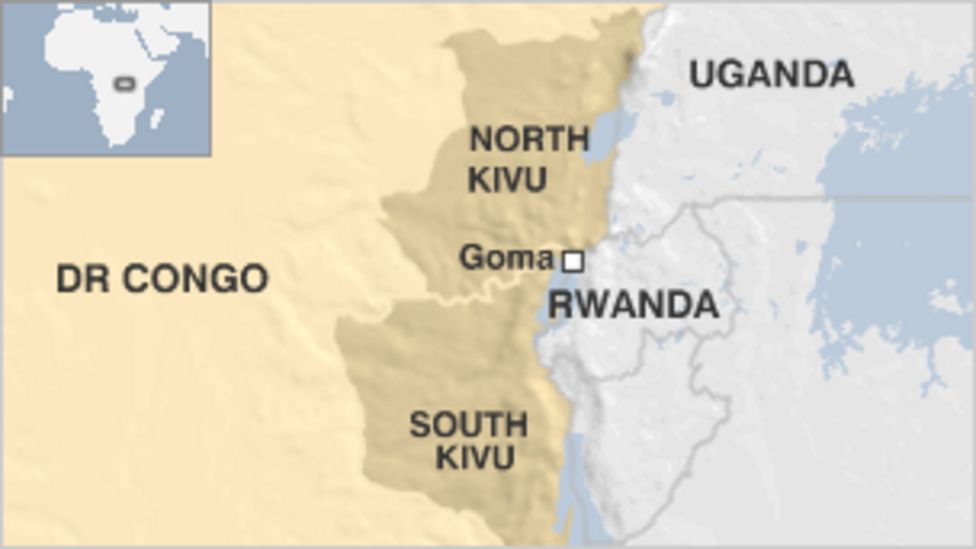
A United Nations report found that Rwanda created and commanded the M23 rebel group.[12] Rwanda ceased its support because of international pressure and the military defeat by the DRC and the UN in 2013.[13] In 2017, M23 elements resumed their insurgency in the DRC, but the operations of this splinter faction had little local impact.[14] In 2022, a larger portion of M23 started an offensive, which eventually resulted in the capture of the Congolese border town of Bunagana by the rebels.[15][16] In November 2022, M23 rebels got close to the city of Goma and forced about 180,000 people to leave their homes after the Congolese Army had withdrawn from the region near the village of Kibumba.[17]. In June 2023, Humans rights watch reported human rights abuses by M23 rebels in the democratic republic of Congo, including unlawful killings, rapes and other war crimes.
Sunday, February 04, 2024
China in DRC
Unraveling the Complexities of China’s Mining Deals in Congo: Broken Promises and Lawlessness
— The Epoch Times (@EpochTimes) February 3, 2024
Since 2015, only $822 million has been spent out of the $3 billion investment promised by China.
👉https://t.co/m61urOvhOe pic.twitter.com/U9DM3gabMk
Saturday, January 06, 2024
Internet for Africans off the web
Starlink now available in Mozambique! https://t.co/j2t09i8wJo
— Elon Musk (@elonmusk) January 5, 2024
Wednesday, January 03, 2024
EU Treaty dangers
From MSNews
they note that it favors Europe in a way that could undermine local industries and even agriculture.The EU-ACP treaty could exacerbate existing trade imbalances. The EU, as a highly developed economic bloc, may have the upper hand in negotiations, potentially leading to terms that favour European interests....
Signing the EU-ACP treaty may expose local industries to stiff competition from more advanced European counterparts. This could jeopardize the growth and sustainability of Nigerian industries, leading to job losses and hindered economic diversification.
... The agricultural sector, a crucial component of Nigeria’s economy, could face challenges under the EU-ACP treaty. The influx of subsidized European agricultural products might undermine the competitiveness of local farmers. This could have detrimental effects on food security and the livelihoods of those dependent on agriculture.
and I suspect the protect the environment types will pressure their farmers to stop growing food because global warming...
Tuesday, July 24, 2018
Monday, May 07, 2018
The new president and the military in Zimbabwe
AlJ has an article about Chiwenga and his military helpers as the real power players in Zimbabwe.
Is this good or bad?
the military has many corrupt in it so it could be a problem.
Read the whole thing.
As a side note: my friend in Africa, a retired teacher who visits and helps the elderly left behind in the villages, was transferred to a new area. I had sent her money for a bicycle, but the nun in charge refuses to let her buy one because of the danger of robbery and rape.
Sigh.
She needs a motorcar, but I am on a pension and can't help her. Usually the Catholics in Europe are the source of funding the Catholics in Zimbabwe, but I guess since the local nuns are now educated and able to do all the work, they are invisible.
but it does show that in former tribal areas in rural Zimbabwe there is a lot of crime.
...Zimbabwe's new president, Emmerson Mnangagwa, formerly an ally of the strongman, has struggled to move beyond the much publicised rhetoric proclaiming "Zimbabwe is open for business" and implement substantial political reforms that may serve to attract much-needed financial investment from abroad, instil consumer confidence throughout the economy and move the US to remove targeted economic and political sanctions that were renewed on March 2....
But the military complex, which comprises the army, ex-army officers and veterans from the 1970s war of independence, has begun to consolidate its power over civilian affairs by occupying positions across all branches of government and refusing to reform the executive infrastructure Mugabe abused for political ends ever since Zimbabwe was plunged into an economic quandary on November 14, 1997, a day known as "Black Friday". Now, Chiwenga not only controls the Defence Ministry, but his erstwhile subordinates hold influential and strategic positions in the government and the ruling Zimbabwe African National Union - Patriotic Front (ZANU-PF). Retired Air Chief Marshal Perrance Shiri heads the Lands, Agriculture and Rural Settlement Ministry, retired Lieutenant-General Sibusiso Moyo is foreign affairs and international trade minister; retired Brigadier-General George Mutandwa Chiweshe is the High Court judge president; and retired Lieutenant-General Engelbert Rugeje was appointed the ruling party's political commissariat in December 2017.
Is this good or bad?
the military has many corrupt in it so it could be a problem.
Read the whole thing.
As a side note: my friend in Africa, a retired teacher who visits and helps the elderly left behind in the villages, was transferred to a new area. I had sent her money for a bicycle, but the nun in charge refuses to let her buy one because of the danger of robbery and rape.
Sigh.
She needs a motorcar, but I am on a pension and can't help her. Usually the Catholics in Europe are the source of funding the Catholics in Zimbabwe, but I guess since the local nuns are now educated and able to do all the work, they are invisible.
but it does show that in former tribal areas in rural Zimbabwe there is a lot of crime.
Saturday, November 19, 2011
Stystem D: Entrepeneurs in Africa
ForeignPolicy magazine has an interesting article about how small entrepeneurs get around a lot of regulations and improve the lot of people.
In the US, this used to be the way to make jobs, but the government, in it's search to regulate everything, is busy destroying the small business owner.
The growth of System D presents a series of challenges to the norms of economics, business, and governance -- for it has traditionally existed outside the framework of trade agreements, labor laws, copyright protections, product safety regulations, antipollution legislation, and a host of other political, social, and environmental policies. Yet there's plenty that's positive, too. In Africa, many cities -- Lagos, Nigeria, is a good example -- have been propelled into the modern era through System D, because legal businesses don't find enough profit in bringing cutting- edge products to the third world. China has, in part, become the world's manufacturing and trading center because it has been willing to engage System D trade.
In the US, this used to be the way to make jobs, but the government, in it's search to regulate everything, is busy destroying the small business owner.
Thursday, June 09, 2011
Hedge funds grabbing African land
BBC reports it's not only China and India that is buying up African farmland:
US and European hedgefunds are buying up the land to make plantations for biofuel.
more reports at the OaklandInstutute
US and European hedgefunds are buying up the land to make plantations for biofuel.
more reports at the OaklandInstutute
Monday, February 14, 2011
Green Gurus
alas, it's streaming audio, but the BBC has interview with three founders of the Green movement:
the most important one for those working in development:
1. EF Schumacher
Julian starts by investigating the legacy of radical economist EF Schumacher. When his catchily titled book 'Small is Beautiful' came out in 1973, it was a huge best seller. He was courted by both politicians and the media. Schumacher's message was that conventional economics had failed us. In headlong pursuit of greater consumption, we had lost our humanity. We needed to get back to basics, he argued, and embrace small scale production and 'economics as if people mattered'. Schumacher believed passionately that the poor of the Third World were perhaps the greatest victims of modern capitalism. He set up an institute to design 'appropriate' technologies for the Third World that would not rely on Western manufacturers. Nearly thirty years on, how have Schumacher's ideas endured? In a world dominated by global corporations has 'Small is Beautiful' been trounced by 'Big is Best'?
 Listen again to Programme 1
the most important one for those working in development:
1. EF Schumacher
Julian starts by investigating the legacy of radical economist EF Schumacher. When his catchily titled book 'Small is Beautiful' came out in 1973, it was a huge best seller. He was courted by both politicians and the media. Schumacher's message was that conventional economics had failed us. In headlong pursuit of greater consumption, we had lost our humanity. We needed to get back to basics, he argued, and embrace small scale production and 'economics as if people mattered'. Schumacher believed passionately that the poor of the Third World were perhaps the greatest victims of modern capitalism. He set up an institute to design 'appropriate' technologies for the Third World that would not rely on Western manufacturers. Nearly thirty years on, how have Schumacher's ideas endured? In a world dominated by global corporations has 'Small is Beautiful' been trounced by 'Big is Best'?
Listen again to Programme 1Tuesday, December 14, 2010
Why are few outsiders wanting to invest in Zim?
The VOA has a discussion why, with different opinions from different Zim leaders.
my opinion? it's not the sanctions (which can be ignored easily by using fronts and proxies). It's because they are worried they will lose their investment. Either Mugabe will decide the company belongs to "the people" (aka his cronies) or officials will want excess kickbacks (although if this is not excess, it's usually written off as business expenses). But they also worry a war could destroy their investments.
Then there is the problem of a crumbling infrastructure, and the fact that the hardest working, best educated Zimbabweans now are working in South Africa.
But what do I know?
my opinion? it's not the sanctions (which can be ignored easily by using fronts and proxies). It's because they are worried they will lose their investment. Either Mugabe will decide the company belongs to "the people" (aka his cronies) or officials will want excess kickbacks (although if this is not excess, it's usually written off as business expenses). But they also worry a war could destroy their investments.
Then there is the problem of a crumbling infrastructure, and the fact that the hardest working, best educated Zimbabweans now are working in South Africa.
But what do I know?
Thursday, June 24, 2010
Africa's economic prospects are bright
from the NYTimes:
In a report released Thursday, McKinsey & Company, the consulting firm, presented a bullish message to companies, arguing that “global businesses cannot afford to ignore the potential.”
“The growth we’ve seen in Africa recently is much more widespread than is generally recognized,” said Arend van Wamelen, an author of the report based in Johannesburg for McKinsey, which advises domestic and international companies investing in Africa. “There are a lot of underlying good things going on in the economies.”
The report, titled “Lions on the Move,” includes an array of arresting facts from the firm’s business and economics research arm, the McKinsey Global Institute. Since 2000, 316 million people on the continent have signed up for cellphone service, more than the entire population of the United States; Africa’s billion people spent $860 billion in 2008, more than India’s population of 1.2 billion.
From 2000 to 2008, African economies grew at twice the pace that they did in the 1980s and 1990s. Moreover, Africa was one of only two regions — Asia was the other — where the collective economy rose through the global recession of 2009, by 1.4 percent.
In a clear sign of the reorientation of the economic landscape in Africa, China has provided more financing for roads, power, railways and other infrastructure in recent years than the World Bank. ,,,
full report HERE.
In a report released Thursday, McKinsey & Company, the consulting firm, presented a bullish message to companies, arguing that “global businesses cannot afford to ignore the potential.”
“The growth we’ve seen in Africa recently is much more widespread than is generally recognized,” said Arend van Wamelen, an author of the report based in Johannesburg for McKinsey, which advises domestic and international companies investing in Africa. “There are a lot of underlying good things going on in the economies.”
The report, titled “Lions on the Move,” includes an array of arresting facts from the firm’s business and economics research arm, the McKinsey Global Institute. Since 2000, 316 million people on the continent have signed up for cellphone service, more than the entire population of the United States; Africa’s billion people spent $860 billion in 2008, more than India’s population of 1.2 billion.
From 2000 to 2008, African economies grew at twice the pace that they did in the 1980s and 1990s. Moreover, Africa was one of only two regions — Asia was the other — where the collective economy rose through the global recession of 2009, by 1.4 percent.
In a clear sign of the reorientation of the economic landscape in Africa, China has provided more financing for roads, power, railways and other infrastructure in recent years than the World Bank. ,,,
full report HERE.
Monday, June 21, 2010
Zim stops seizure of central bank assets
from Reuters
HARARE, June 20 (Reuters) - Zimbabwe has ordered creditors owed millions of dollars by its bankrupt central bank to stop auctioning the bank's property, local state media reported on Sunday, saying the seizures were tantamount to asset stripping.
The Reserve Bank of Zimbabwe (RBZ) failed to pay local and foreign companies about $1 billion mainly for fertiliser, seed, tractor and vehicle imports at the 2008 peak of an economic crisis which many people blame on President Robert Mugabe's policies.
Finance Minister Tendai Biti told the state-run Sunday Mail newspaper that the unity government Mugabe formed with rival Prime Minister Morgan Tsvangirai had decided to halt the auctioning of the bank's assets by creditors.
HARARE, June 20 (Reuters) - Zimbabwe has ordered creditors owed millions of dollars by its bankrupt central bank to stop auctioning the bank's property, local state media reported on Sunday, saying the seizures were tantamount to asset stripping.
The Reserve Bank of Zimbabwe (RBZ) failed to pay local and foreign companies about $1 billion mainly for fertiliser, seed, tractor and vehicle imports at the 2008 peak of an economic crisis which many people blame on President Robert Mugabe's policies.
Finance Minister Tendai Biti told the state-run Sunday Mail newspaper that the unity government Mugabe formed with rival Prime Minister Morgan Tsvangirai had decided to halt the auctioning of the bank's assets by creditors.
Monday, June 14, 2010
Political capital and business
from the Zim Mail, an ongoing discussion of Africa and the business community.
"...My experience in doing business in Africa has informed me that even the most educated people can be financially and commercially illiterate which makes the job of piloting the African development agenda more complex in that the key decision makers in the continent lack the moral capital that is required to underpin sustainable commercial capital development.
Can commerce, a pre-requisite for human development and growth, be sustainable without moral capital? There is nothing inevitable in human affairs to the notion that markets and morals are not aspects of the spontaneous order of society.
A connection does exist between moral capital, commerce and economic performance and, if anything, this was the primary purpose of these 20 articles. .."
"...My experience in doing business in Africa has informed me that even the most educated people can be financially and commercially illiterate which makes the job of piloting the African development agenda more complex in that the key decision makers in the continent lack the moral capital that is required to underpin sustainable commercial capital development.
Can commerce, a pre-requisite for human development and growth, be sustainable without moral capital? There is nothing inevitable in human affairs to the notion that markets and morals are not aspects of the spontaneous order of society.
A connection does exist between moral capital, commerce and economic performance and, if anything, this was the primary purpose of these 20 articles. .."
Monday, March 29, 2010
No one wants to train for WC in Zimbabwe
from the Zimbabwe Mail:
HARARE - Zimbabwe’s hopes of earning much-needed revenue by hosting football teams before the Fifa World Cup in June in neighbouring South Africa have been dashed: none of the 32 qualifiers chose to hold training camps here.
The government had made attracting a high-profile team to train here a priority in its rebranding and economic reconstruction efforts after 10 years of isolation and economic distress...Hoteliers and restaurateurs spent large sums of money refurbishing their outlets to world-class standards. Home owners in the biggest cities, Harare and Bulawayo, and the resort town of Victoria Falls stampeded to register their houses as the government estimated that established hotels and lodges would be short of space for the anticipated influx of international sport tourists.
Saturday, March 13, 2010
An Early Election?
From the UK Economist
...Talks to encourage Mr Mugabe to implement fully the power-sharing agreement he signed 18 months ago under the aegis of the Southern African Development Community (SADC), a 15-country regional grouping, have foundered....
The dirty little secret is that rhetoric against capitalism is easy, but if you want people to invest their money into the country, they have to be sure they won't lose it to corruption...
...Talks to encourage Mr Mugabe to implement fully the power-sharing agreement he signed 18 months ago under the aegis of the Southern African Development Community (SADC), a 15-country regional grouping, have foundered....
Since the unity government was set up a year ago, Mr Mugabe has treated Mr Tsvangirai and his party with contempt. The violation of human rights, the persecution of MDC campaigners, the invasion of white-owned farms and disregard for the rule of law—all supposed to have been dealt with under the pact—have continued unabated. Now, as if to underline Mr Tsvangirai’s impotence, Mr Mugabe has unilaterally stripped several MDC ministers of their powers, transferring them to ZANU-PF ministers.
Likewise, without consulting his prime minister, he has recently issued new “indigenisation” rules, requiring at least half of any company worth over $500,000 that is owned by whites or foreigners to be owned by black Zimbabweans. Whites are also to be banned from running certain smaller businesses, such as estate agents, hairdressers and advertising agencies. Violators face up to five years in jail. Though Mr Tsvangirai has pronounced the new law “null and void”, some legal people say there is little he can do to block it.
The Zimbabwe stock exchange, where shares had been rising fast in the past year, slumped on the news....The dirty little secret is that rhetoric against capitalism is easy, but if you want people to invest their money into the country, they have to be sure they won't lose it to corruption...
Wednesday, March 03, 2010
African Poverty is Falling
From MarginalREvolutionBlog:
A working paper from the National Bureau of Economic Research:
summary:
The conventional wisdom that Africa is not reducing poverty is wrong. Using the methodology of Pinkovskiy and Sala-i-Martin (2009), we estimate income distributions, poverty rates, and inequality and welfare indices for African countries for the period 1970-2006. We show that: (1) African poverty is falling and is falling rapidly; (2) if present trends continue, the poverty Millennium Development Goal of halving the proportion of people with incomes less than one dollar a day will be achieved on time; (3) the growth spurt that began in 1995 decreased African income inequality instead of increasing it; (4) African poverty reduction is remarkably general: it cannot be explained by a large country, or even by a single set of countries possessing some beneficial geographical or historical characteristic. All classes of countries, including those with disadvantageous geography and history, experience reductions in poverty. In particular, poverty fell for both landlocked as well as coastal countries; for mineral-rich as well as mineral-poor countries; for countries with favorable or with unfavorable agriculture; for countries regardless of colonial origin; and for countries with below- or above-median slave exports per capita during the African slave trade....
This paper is available as PDF (452 K) or via email.
A working paper from the National Bureau of Economic Research:
summary:
The conventional wisdom that Africa is not reducing poverty is wrong. Using the methodology of Pinkovskiy and Sala-i-Martin (2009), we estimate income distributions, poverty rates, and inequality and welfare indices for African countries for the period 1970-2006. We show that: (1) African poverty is falling and is falling rapidly; (2) if present trends continue, the poverty Millennium Development Goal of halving the proportion of people with incomes less than one dollar a day will be achieved on time; (3) the growth spurt that began in 1995 decreased African income inequality instead of increasing it; (4) African poverty reduction is remarkably general: it cannot be explained by a large country, or even by a single set of countries possessing some beneficial geographical or historical characteristic. All classes of countries, including those with disadvantageous geography and history, experience reductions in poverty. In particular, poverty fell for both landlocked as well as coastal countries; for mineral-rich as well as mineral-poor countries; for countries with favorable or with unfavorable agriculture; for countries regardless of colonial origin; and for countries with below- or above-median slave exports per capita during the African slave trade....
This paper is available as PDF (452 K) or via email.
Subscribe to:
Posts (Atom)